 ScaleBox + HomeRack
Planned for a standard 19-inch rack.
REAL-DEVICE OPERATIONS
A phone fleet.
One workbench.
ScaleBox is designed to bring up to 20 iPhones into one rack. HomeRack is the software for driving them. Together, they’re a way to build AI-assisted workflows on devices you control.
Explore the hardware ↓See the workflow ↗SB / 01DESIGN STUDY
01 / HARDWARE
Inside the ScaleBox.
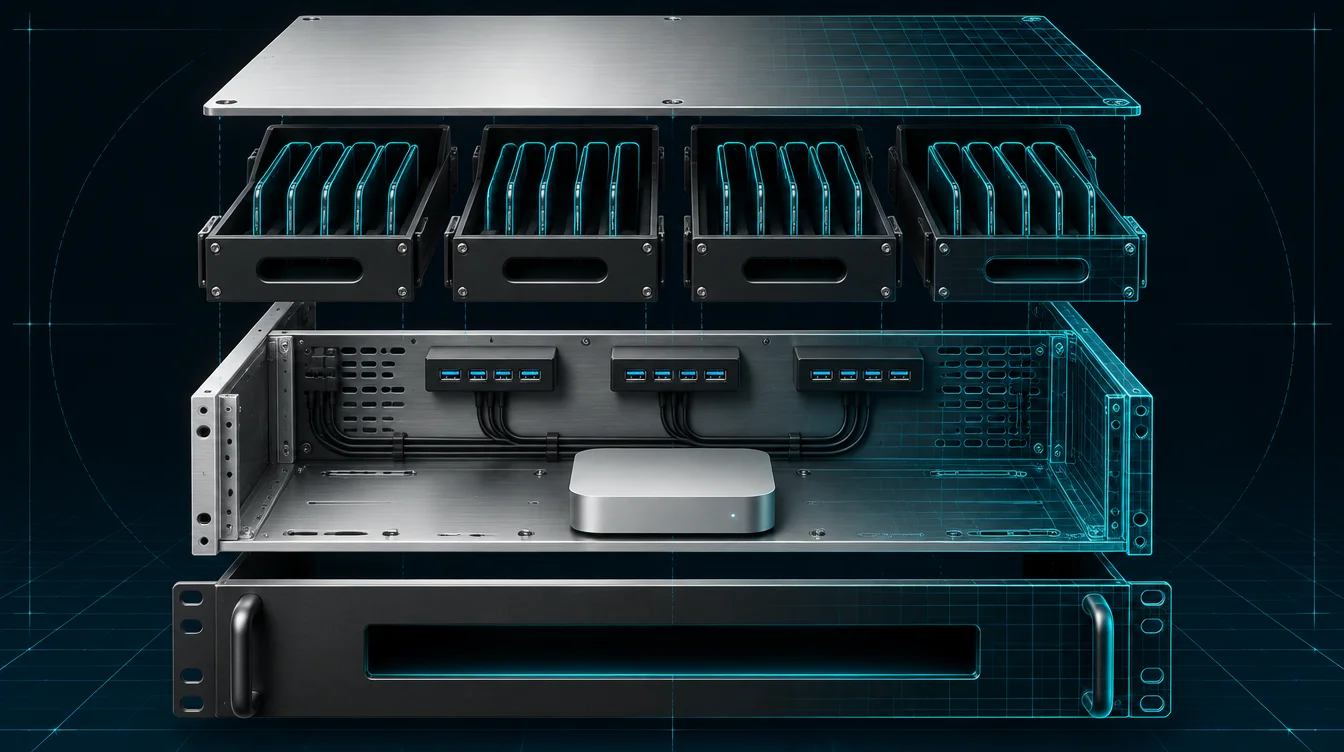
The design starts with the phones, then makes room for the host, hubs and a front display. These are design targets, not tested specifications.
Caseless iPhones at the design target.
Four removable carriers, five devices apiece.
A Mac mini host with space for three powered hubs.
02 / SOFTWARE
Meet HomeRack.
HomeRack is self-hosted software for operating USB-connected iPhones from a Mac mini. It is in use by the team today, with an individual-phone view and a MultiView wall.
Tested on a real iPhone 16: taps, swipes, long presses, typing and navigation. The workflow below is an illustration, not the live prototype.
STAGE 01 / 03
Choose a test group.
For an app QA pass, start with a small group of company-owned iPhones. The rest of the fleet can stay out of the run.
03 / FIELD NOTES
Good to know.
What exists today?
HomeRack has demonstrated control on a real iPhone. A fully integrated 20-phone system has not been validated. The ScaleBox enclosure is in design. The planned layout does not establish fit, cooling, electrical performance or tested fleet capacity.
Who is this designed for?
Teams doing app QA, testing mobile onboarding or running internal checks on devices they own or are authorized to operate.
Where does AI fit?
One example is using AI to draft test steps or summarize discrepancies for a person to review. Those are potential workflows, not claims about built-in HomeRack features.
Can I buy the hardware?
No orders are being taken here. Pricing, a release date and production specifications have not been announced on this site.